

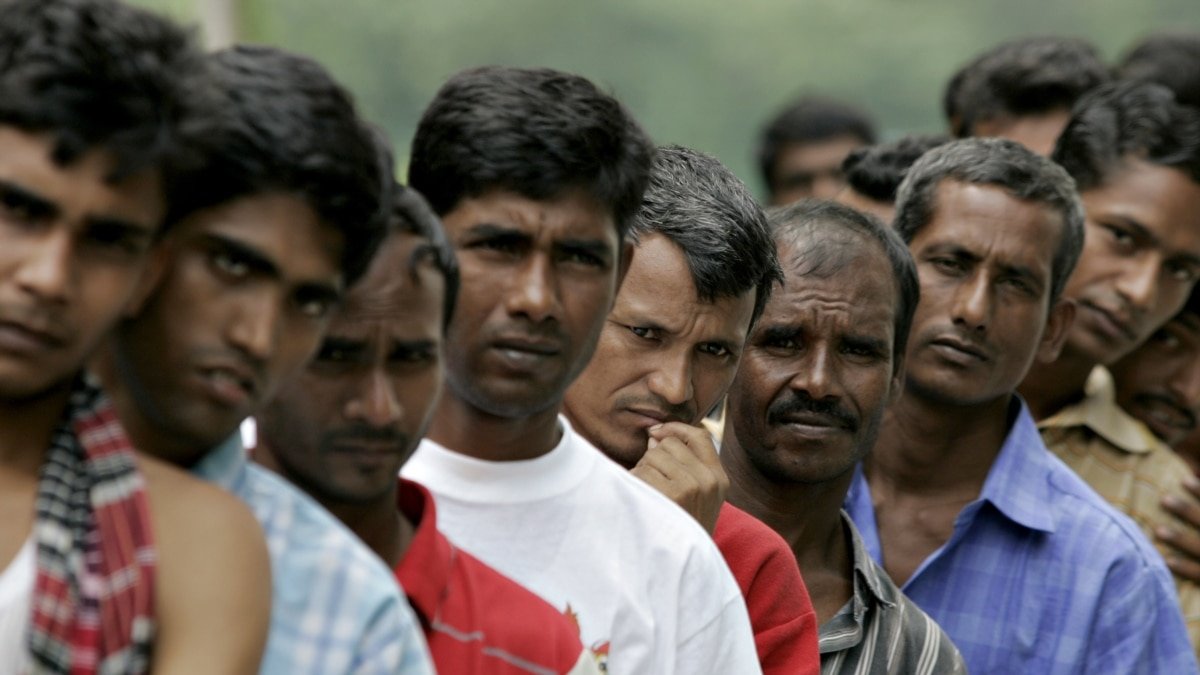
– By Mohammad Harun Or Rashid
Migrant rights activist
15 October 2026
“Migration should continue—but with dignity, rights and accountability.”
For many years, I have watched the Bangladesh–Malaysia labour migration corridor with deep concern, frustration and sadness. This corridor should have been one of the best examples of safe, regular and dignified labour migration. Malaysia needs workers. Bangladesh has workers who are ready to work hard, earn honestly and support their families. On paper, it looks like a natural partnership.
But in reality, the history of Bangladesh–Malaysia labour recruitment has become a painful story of repeated opening, closure, reopening and closure again. Each time, workers are given hope. Each time, they borrow money, sell land, mortgage family assets and prepare for a better future. Each time, governments and recruiters promise a new system, a better system, a transparent system. But after some years, the same problems return: excessive recruitment fees, syndication, fake demand, joblessness after arrival, unpaid wages, passport confiscation, debt bondage, undocumented status and forced return.
This is not a small administrative problem. This is a repeated policy failure. It is also a human tragedy.
The central message
This corridor can be reopened, but it must not be reopened through the same model that produced debt, deception and repeated market closure.
A cycle that keeps repeating
The labour market was closed in 1997 after serious problems of irregularity and undocumented workers. It reopened again around 2006–2007, but under an outsourcing and broker-driven system many workers suffered from high costs, deception and joblessness. The market closed again around 2008–2009. Then came the 2012 G2G arrangement, which was presented as a clean, government-to-government model to reduce the role of brokers and lower migration costs. But that system moved slowly and could not meet the expectations of workers or employers.
Then came G2G Plus and the later discussion of syndication. Around 2015, concerns were already being raised that the Malaysia recruitment process could be controlled by a limited number of agencies and business actors. Eventually, this concern became reality. By 2018, recruitment under a restricted agency model was again linked with allegations of monopoly, excessive costs and exploitation. The market was suspended again.
Then, after years of negotiation, the market reopened in 2022. Workers again believed that this time things would be better. But once again, many paid huge amounts of money. Many reached Malaysia and found no proper job. Some waited in poor accommodation. Some became undocumented through no fault of their own. Some returned with debt, shame and trauma. In 2024, the market closed again.
Now, Bangladesh and Malaysia are again discussing another MoU.
The flip-flop pattern in one line
Market opens → Restricted control → High fees and debt → Weak or fake demand → Worker exploitation → Market closes → New MoU promised.
The key question
How many times will we repeat the same mistake?
Migration should continue—but not like this
We must be very clear: we are not against labour migration to Malaysia. Bangladeshi workers have contributed enormously to Malaysia’s economy. They work in plantations, factories, construction, services and many other sectors. They help Malaysia grow. At the same time, their remittances support families and communities in Bangladesh. Safe and regular migration to Malaysia should continue.
But migration cannot be safe if it begins with debt. It cannot be regular if job demand is not genuine. It cannot be ethical if workers pay huge fees before departure. It cannot be dignified if passports are taken, wages are unpaid and complaints are ignored. It cannot be called a success if workers come back poorer than before.
The problem is deeper than illegal brokers
The problem is not only illegal brokers. The problem is deeper. It is the political economy of recruitment. It is the control of the corridor by powerful business interests. It is the lack of transparency in agency selection. It is fake or poorly verified demand. It is weak monitoring after arrival. It is the absence of real compensation for affected workers. It is the failure of both sending and receiving countries to hold employers, agencies, intermediaries and platform operators accountable.
Every time the market closes, workers suffer first. Recruiting agencies blame each other. Governments negotiate again. Employers look for cheaper labour. But the worker who sold land or borrowed money has no one to turn to. His family carries the debt. His children suffer. His social dignity is damaged. In many cases, he cannot even speak publicly because of shame, fear or pressure.
The human cost
The worker carries the debt. The family carries the loss. The system moves on and negotiates again.
What any new agreement must contain
This is why any new Bangladesh–Malaysia agreement must not be another weak MoU. We need a legally binding Bilateral Labour Agreement with enforceable worker protection. We need a system that clearly says: the worker will not pay recruitment fees. The employer must bear the cost. We need full transparency on recruitment costs, agency selection, employer demand, job contracts and digital platforms. We need genuine job verification before departure. We need joint monitoring after arrival. We need fast complaint handling. We need the right to change employer in cases of abuse. We need protection from detention and deportation for workers who are victims of recruitment fraud or forced labour.
Principle
What it means in practice
Justice first
Compensation and remedy for workers already harmed by past recruitment cycles.
No worker-paid debt
Binding Employer Pays Principle and a clear ban on recruitment fees charged to workers.
No syndicate
No monopoly, cartel, restricted agency control or hidden platform capture.
Verified jobs only
Demand, employer, contract, salary and accommodation must be verified before departure.
Monitoring after arrival
Joint Bangladesh–Malaysia monitoring must continue at workplaces, not only before departure.
Justice for those already harmed
Most importantly, we need justice for those who have already suffered.
Before signing another agreement, both governments must ask: what happened to the workers who paid huge fees and returned empty-handed? What happened to the workers who arrived in Malaysia but found no job? What happened to those who became undocumented because the employer or recruiter failed them? Who will compensate them? Who will investigate the agencies, employers and intermediaries who made money from their suffering?
A new agreement without justice for past victims will only create a new round of victims.
Responsible agencies must also stand for reform
Responsible recruiting agencies also have a role to play. Not all agencies are the same. Some agencies want a fair, transparent and open system. They also suffer when a syndicate or restricted group captures the market. Therefore, ethical agencies, civil society, returnee workers, trade unions and migrant rights organisations should stand together on one principle: no syndicate, no monopoly, no hidden cost, no fake job, no worker-paid recruitment debt.
The Bangladesh–Malaysia corridor can still be reformed. But reform will not come from another closed-door MoU. It will come from listening to workers, publishing the agreement, consulting civil society, involving responsible agencies, ensuring employer accountability and building a monitoring system that works in reality, not only on paper.
A final appeal
For too long, Bangladeshi migrant workers have been treated as numbers, remittance senders and manpower export units. They are human beings. They are fathers, mothers, sons, daughters and citizens of Bangladesh. They deserve respect. They deserve protection. They deserve justice.
I believe migration should continue. But it must continue with dignity. It must continue with rights. It must continue with accountability.
Bangladesh must not sign another agreement that repeats the failures of the past. Malaysia must not accept workers through a system that creates debt bondage and exploitation. Both governments must show political courage and break the cycle of flip-flop recruitment.
The message should be clear:
No more opening and closing without accountability.
No more syndicate-driven recruitment.
No more debt-based migration.
No more fake promises to workers.
No more MoU without justice.
The Bangladesh–Malaysia labour corridor must be rebuilt on fairness, transparency and human dignity. Anything less will be another betrayal of migrant workers.